
Everyone starts somewhere. Whether you have just moved into your first place, want to stop paying someone else to hang a shelf, or simply love the idea of making things with your own hands, do-it-yourself is one of the most rewarding skills you can pick up. And here is the best part: you do not need a garage full of expensive kit or years of experience to get going. You just need a few essentials, a little patience, and the willingness to have a go.
At B&Q we see thousands of first-time DIYers browse our website at diy.com every week. This guide walks you through everything you need to begin — the mindset, the must-have tools, a few beginner-friendly projects, and the safety basics that keep the whole thing fun.
Start with the Right Mindset
Before you pick up a single tool, know this: mistakes are part of the process. Even seasoned tradespeople measure twice and occasionally still cut once too short. DIY is not about being perfect on the first try — it is about learning as you go and building confidence with each small win.
Pick projects that match your current skill level. It is tempting to jump straight into building a fitted wardrobe, but starting small means you finish tasks, feel good about them, and actually want to keep going. Momentum matters more than ambition when you are new.
The Essential Beginner Toolkit
You can tackle a surprising number of jobs with a modest set of tools. Rather than buying everything at once, start with these core items and expand as your projects demand:
A cordless drill/driver. This is the single most useful tool you can own. It drills holes and drives screws, saving your wrists and your patience. Look for one with two battery packs so you are never caught mid-job with a flat charge.
A tape measure. A 5-metre tape covers almost everything around the home. Remember the golden rule — measure twice, cut once.
A spirit level. Nothing looks worse than a crooked shelf. A small torpedo level fits in a drawer and keeps everything straight.
A set of screwdrivers. A mix of flathead and Phillips (cross-head) in a few sizes handles most fixings.
A claw hammer. For driving nails and gently persuading stubborn parts, with the claw end for pulling nails back out.
A utility knife. Endlessly handy for opening packaging, scoring, and trimming.
Safety glasses and a dust mask. Cheap, essential, and often overlooked.
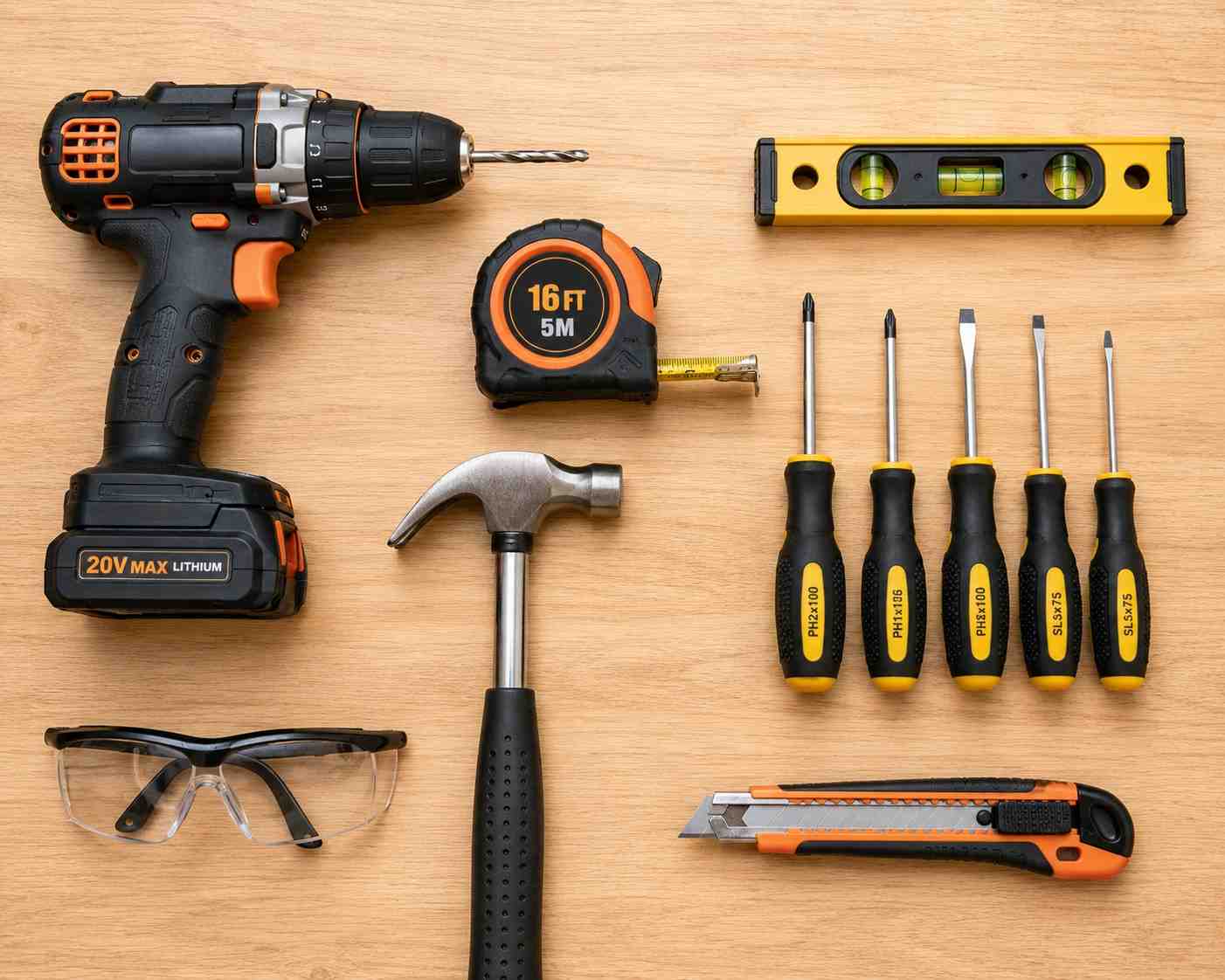
Buy the best you can reasonably afford. You do not need top-of-the-range professional gear, but rock-bottom bargain tools often break, slip, or frustrate you into giving up. A solid mid-range set will last for years.
Three Great First Projects
Once your kit is ready, the best way to learn is by doing. Here are three beginner-friendly projects that teach core skills and give you a satisfying result.
1. Hang a Shelf
A classic first job. You will learn to find studs (or use the right wall plugs for plasterboard), measure and mark accurately, check your level, and drive screws cleanly. Choose a floating shelf for a tidy, modern finish. The moment you place your first book or plant on a shelf you fitted yourself is genuinely satisfying.
2. Refresh a Room with Paint
Painting is forgiving, affordable, and transforms a space faster than almost anything else. You will practise preparing surfaces, taping edges, cutting in with a brush, and rolling smoothly. Start with a single feature wall if a whole room feels daunting. Good preparation — filling holes, sanding, and cleaning — is what separates a professional-looking finish from a patchy one.
3. Build a Flat-Pack Unit
Flat-pack furniture gets a bad reputation, but assembling a bookcase or drawer unit is a brilliant confidence-builder. You will learn to read instructions carefully, sort your fixings before you start, and use your drill on a low torque setting. Lay all the parts out, count everything, and work on a soft surface to avoid scratches.
Safety First, Always
DIY is safe when you respect a few simple rules. Always unplug power tools before changing bits or blades. Keep your work area tidy — most accidents happen when you trip over clutter or reach across a running tool. Wear your safety glasses whenever you drill, cut, or sand, and a dust mask when there is dust in the air.
If a job involves gas, mains electrics beyond changing a fitting, or structural changes to your home, call a qualified professional. Knowing your limits is a skill in itself, and there is no shame in it.
Where to Learn More
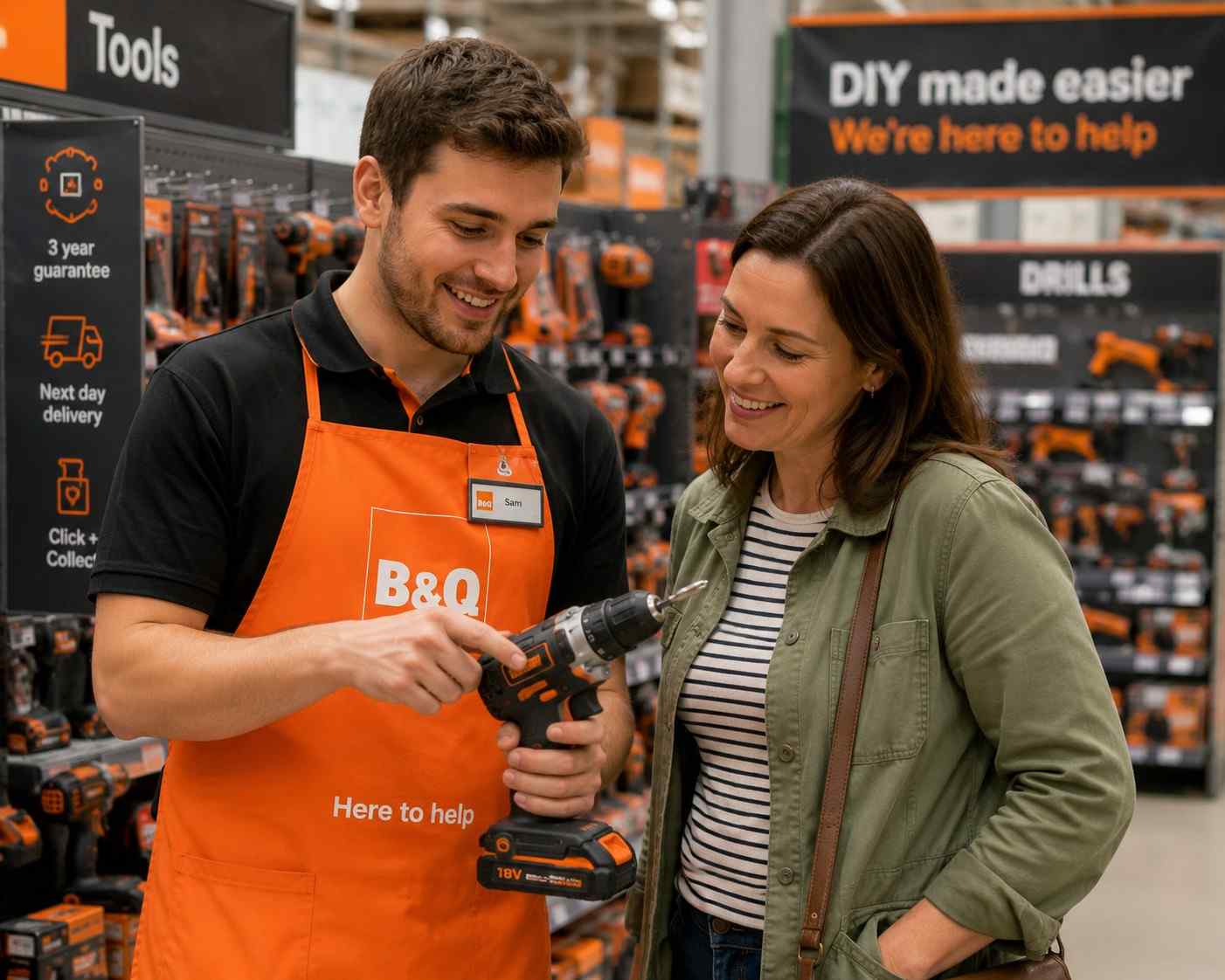
The DIY community is famously generous. Watch video tutorials before attempting something new, read the reviews on tools and materials at DIY, and do not be afraid to ask staff in-store for advice — they genuinely enjoy helping beginners get started.
Ready to Begin?
The hardest part of DIY is simply starting. Once you finish that first shelf or freshly painted wall, you will wonder why you waited. Grab your essentials, pick a small project, and give it a go — your future, more confident self will thank you.
Everything you need to start your DIY journey is available at B&Q on DIY, from beginner tool kits to paint, fixings, and expert advice.
Start Your First Project — Shop Now →
Have a beginner DIY question? Explore our full range of guides and tools to keep building your skills.